


'Lilian's Last Dance': Exploring the U.S. -- Oklahoma to Hawaii in search of book details
Updated: Jul 31
WRITERS TOOK TO BACKROADS, MUSEUMS, RANCHES, HOTELS IN SEARCH OF LOCAL COLOR TO ENHANCE THE STORY

STORY By CHRISTENE MEYERS
Archival photos and
RECENT PHOTOS By BRUCE KELLER
"The Carpe Diem Kids"
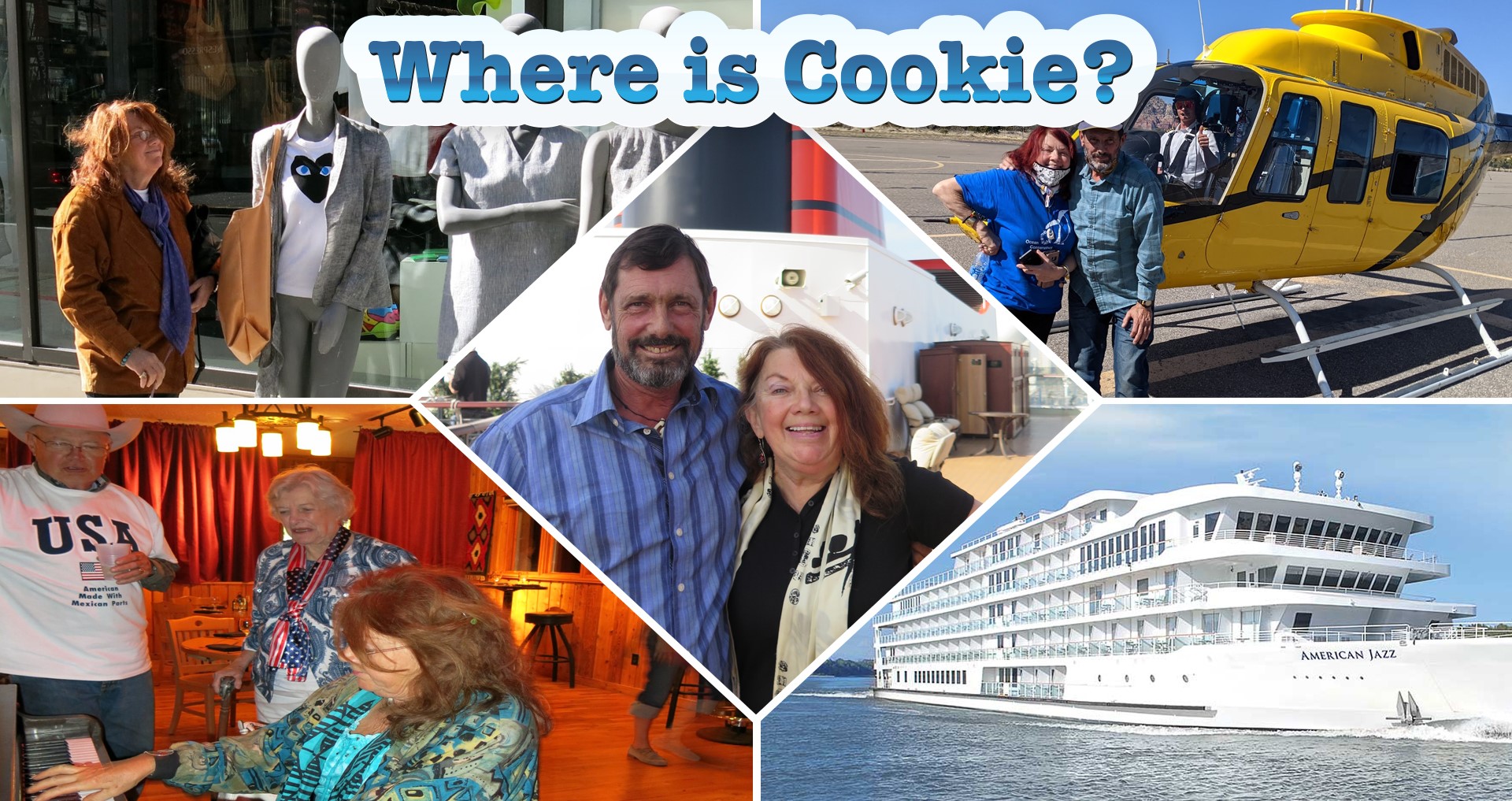
ON THE TRAIL of local color and detail for the book, "Lilian's Last Dance," my late husband Bill Jones and I traveled to Hawaii, Nebraska, Oklahoma, Texas, Illinois and many other states. We learned so much about the United States, obscure details I'd have never found had we not been researching our characters. Europe plays prominently in the historical novel, and we took several trips there, too. This story focuses on the book's U.S. settings.

On our last road trip before Billy's final illness, we visited the site of the Miller Ranch near Ponca City, Okla., then drove to Illinois for a stay in Chicago's iconic Palmer House, a hotel still famous for its art collection and historic allure.

The story of downtown Chicago’s Palmer House Hilton is as romantic as the story of our novel.
POTTER PALMER was a Chicago business magnate -- well-known for a variety of endeavors, including his staring role in the development of downtown Chicago’s iconic State Street. Marshall Field of department store fame introduced Palmer to a younger, beautiful socialite, Bertha Honore, who had a yearning for learning.

A romance and engagement followed, then he gave her the grandest wedding gift of all time -- Palmer House. It was and is a fabulous Chicago Hotel and we spent two nights in it, given entree to vintage photos. Because our characters visit it, we wanted it to feel "real." Bertha Palmer was a friend of artist Claude Monet. Her art collection rivaled Gertrude Stein's, a cameo character in "Lilian's Last Dance.''
OFTEN OUR fictional characters and real people interlaced as we researched "Lilian's Last Dance."
Sometimes, our road trips inspired invention of a fictional place. Other times, a real place, such as the Palmer House, seemed ideal for our character's road trip. Lovely little offshoots were constantly occurring! In a sense, we were bit players in the novel, too! Illuminating memories.

IN OKLAHOMA, we interviewed historians about the Miller Brothers famed 101 Ranch. One night, at a Tulsa restaurant, I played "Oh What a Beautiful Morning." That night in that beautiful Oklahoma bar, we made friends including an elderly woman who shared information on early-frontier cowboys and their clothing. We took careful notes. She and the rest of the crowd surrounded the piano, teary-eyed and singing along as I played the entire score from "Oklahoma." .
THE 101 was once a stupendous 110,000-acre cattle ranch in the Indian Territory of northeastern Oklahoma, but it's a relic of grander days now. It's located near modern-day Ponca City, where I'd never been. I knew little about many of these places, until the novel!
When the 101 was king it was the largest diversified farm and ranch in America. So our characters had good taste! The place today is a National Historic Landmark, an homage to its 1903 grandeur when its owners hobnobbed with our novel's hero, Ballentine McCleave.

THE PARKER Ranch on Hawaii's Big Island beckoned, as we gleaned details about the paniolo cowboys of a century-plus ago. We went to a rodeo there and spent time in a Honolulu library researching paniolo history.

History is people. Everywhere we went, we found history through people, to give us a feeling for the novel's colorful characters. Our female paniolo, sometimes called a paniola, passes herself off as a Mexican bandita, or at least she tries to. But she's really a purebred Hawaiian cowgirl with a fascination for Pancho Villa.
And Ballentine has her number!

"
COMING UP: "The Flickers." That's what early-day movies were called. "Lilian's Last Dance" -- set in the early 1900s -- builds up to this exciting time in cinema history. Both Cookie (Christene Meyers) and Bill Jones, the novel's co-author, were arts writers and film critics during the early stages of the novel's development.. Continuing the research, Keller and Meyers revisited the birthplace of the modern movie industry.
They prowled the grounds of the lots, looked at hundreds of old playbills and movie posters and took notes on four Hollywood nostalgia tours.
Remember, carpe diem, so explore, learn and live and visit us weekly for a fresh spin on the arts, travel and more: www.whereiscookie.com


Comments