


Montana State Capitol Offers Lively Tour with History, Color, Controversy

Story By Christene Meyers
Photos By Bruce Keller
"The Carpe Diem Kids"

In our global wanderings, we visit many buildings simply because they are beautiful.
The Montana State Capitol in Helena is indeed a lovely building. But it tells our state's colorful and interesting story, too.
Rising above the capital city, the Capitol has been Montana’s seat of government since the main building was completed in 1902.
Recently, we joined visitors from Norway, Chile, Georgia and Minnesota to walk through its impressive public spaces. We admired Montana artwork and architecture and learned about the people and events that helped shape the Treasure State.
For travelers exploring Helena, a visit to the Montana State Capitol is an easy and memorable way to experience Montana history firsthand.

Welcome to Montana’s “People’s House”
The Montana State Capitol is known as the “People’s House,” and that name seems appropriate as we walked through its doors with visitors from the U.S. and abroad. We heard Scandinavian accents, an Irish brogue and southern accents, a truly global representation.
The Capitol sits at 1301 EastSixth Avenue, on a pretty campus surrounded by flowers, lawns and other historic and government buildings. The building is an impressive combination of Montana sandstone and granite, crowned by a copper dome and the familiar figure of Liberty, under wraps for a major $32 million renovation, scheduled for completion in 2028.
The main section of the Capitol was completed in 1902, with two wings added in 1912. More than a century later, it remains the state's most recognizable landmark, with myriad surprises inside. My favorites are sculptures: U.S. representative Jeanette Rankin, the first woman to hold federal office in the U.S., and beloved Senator Mike Mansfield and his wife Maureen.
While the exterior hints at the building’s importance, the interior makes my native state's story really come alive.

Look Up When You Enter
One of the first things visitors notice is our magnificent rotunda.
We looked upward and took our time to admire artwork, murals, architectural details and historic references that celebrate Montana’s people and its past.
The rotunda includes large circular paintings representing aspects of Montana history: Native Americans, explorers and trappers, miners and cowboys. These images reflect an intriguing mix of people and experiences, all part of our story.
For visitors who enjoy history, architecture and art, we recommend slowing down. Don't simply walk through.
We imagined what Montana must have been like when she was a young state.

I especially enjoyed murals of the Montana Women’s Mural project. Montana artist Hadley Ferguson and historians determined to pay homage in two panels to women who helped form our state.
The murals hang on both sides of the grand staircase, on the east and west walls of the Capitol's third floor. They enhance the theme of the statehouse's impressive art -- a narrative of Montana history.
Montana Art Inside the Capitol
A highlights of our visit was the artwork, including pieces by legendary Montana artist Charles M. Russell.
His painting, Lewis and Clark Meet the Salish at Ross’ Hole, depicts the famous meeting between the explorers and members of the Salish people in 1805. Our guide ushered us into seats above the House of Representatives gallery so we could pause to admire it.
Russell's works are praised for their ability to draw the viewer in, making history come alive.

Take a Guided Tour of the Montana State Capitol
If you have the time, we recommend taking a guided tour. The Montana Historical Society offers free guided tours focusing on the building’s history, art, architecture and civics.
The tours last an hour and take visitors through the public areas of the Capitol.

Prefer to Explore on Your Own?
Not everybody likes a scheduled tour, and that's perfectly fine.
The Montana State Capitol welcomes visitors who want to take a self-guided tour.
Self-guiding tour booklets are available at the first-floor information desk. There is also a scavenger hunt designed for children, featuring Lewis and Clark's Newfoundland dog, Seaman.
For those who desire a little research before visiting, the Montana Historical Society provides an interactive student guide, Explore Your Statehouse, along with a virtual tour and 43-minute video tour.
A self-guided visit gives the freedom to move at one's own pace.
You can spend extra time looking at the artwork, sit quietly in the rotunda or simply wander through the public spaces and enjoy the architecture.

Group Tours, School Visits?
The Montana Historical Society offers school tours. Teachers can coordinate visits directly with the Secretary of State at (406) 444-2034 or the Montana Supreme Court at (406) 444-5570. The Montana Historical Society also offers school field-trip opportunities involving the Capitol and other Helena sites. Commercial tours must be scheduled in advance, with a capacity of 30 people at $100 per tour, a fine option for motorcoach groups, organized travel groups and visitors who want a more structured experience.

Make the Capitol Part of Your Helena Day
One of the best things about visiting the Montana State Capitol is its central location.
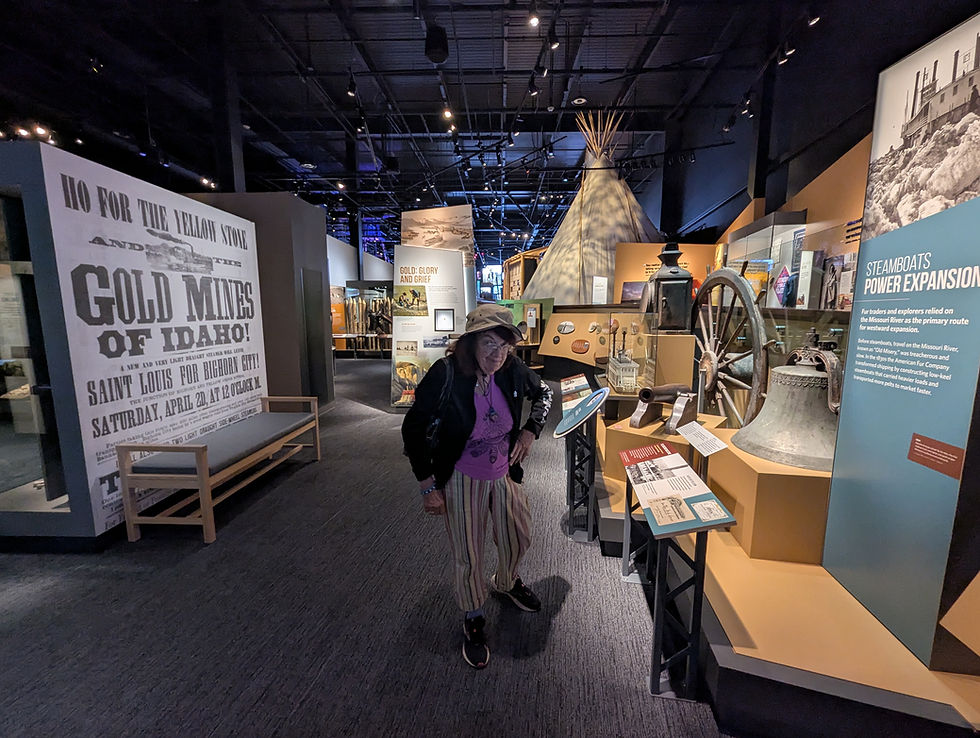
You can easily combine a Capitol visit with other Helena attractions, the fun and historic Last Chance Tour Train and other sites such as the fabulous, nearby Montana Heritage Center. After our Capitol tour, we spent a fun afternoon on the train and in the beautiful Center.
The train takes travelers into Montana's gold-rush history, as guides explain the city's lively commercial and political history. We enjoyed the Victorian architecture of well kept neighborhoods, where grand homes, businesses and churches reflect Helena's rich past.
So start with the Capitol, then head for the train and Heritage Center for a delightful day of learning about Montana's history, government, art and architecture.

A Few Tips Before You Go
Allow about an hour for the guided tour. That gives you enough time to enjoy the tour without feeling rushed.
Check the schedule before you arrive. Tour times change seasonally, and construction or special events can affect access.
Arrive early. If you're taking a guided tour, give time to park, enter the building and find the meeting location on the first floor.
Don't forget your camera. The rotunda and interior artwork provide great photo opps.
Look up! Some of the most interesting details are above eye level.
Give yourself extra time. Even after the tour is finished, wander back through the public spaces and see some of the details you missed.
Final Thoughts for Your Montana Capitol Visit
Travel is often about seeing something you've never seen before, but the best travel experiences also leave you knowing something you didn't know when you arrived.
That's what makes the Montana State Capitol a worthwhile stop. Take the guided tour if you can. Explore on your own if you prefer. Look at the artwork, study the architecture and imagine the generations of Montanans who have walked through those same halls.
Combining a visit to the Montana Capitol, a ride on the Last Chance Tour Train, and visit to the Montana Heritage Center, beautifully blends Montana stories -- our proud Native American heritage, story of explorers and miners, traditions of the American West and artwork of one of Montana's most celebrated artists.
It's a day of honoring the optimism and ambition of Montana more than a century ago.
And when you're planning your Montana adventure, have a look at WhereIsCookie.com

We're always looking for the interesting places, memorable tours, historic treasures and unexpected gems that can make a trip more enjoyable. From Montana and beyond, WhereIsCookie.com offers travel stories, tips, guides and discoveries to add to your itinerary.
COMING SOON:

The spectacular Hakone Open-Air Museum, is a wonderful outdoor offering if you are planning a trip to Japan. The remarkable museum is designed on 70,000 square meters of attractive gardens and lawns and includes works by Picasso, Moore, Rodin and many other famous artists. It opened in 1969, as Japan's first open-air museum. It is located in Hakone, Ashigarashimo District, Kanagawa Prefecture. Come along, won't you, remembering to explore, learn and live and catch us weekly for a fresh spin on the arts, performance, travel, nature and more: www.whereiscookie.com


We have our wonderful Buffalo Bill Center. Now you have another fine museum for tourists and locals alike. Great story and photos.