


Transiting the Panama Canal by Cruise Ship: An Experience Every Traveler Should Have
Story By Christene Meyers
Photos By Bruce Keller
"The Carpe Diem Kids"

Why Everyone Should Transit the Panama Canal
A Panama Canal cruise isn't simply a way to get from one ocean to another. It is a journey into history, geography and engineering -- and one thousands of travelers each year experience from the comfort of a cruise ship.

We've experienced the adventure five times and have booked our sixth canal transit. We love the shore excursions, with their tremendous variety -- from bird watching to hiking, zip lining and touring native villages with ancient ruins.
The Canal cuts approximately 50 miles across Panama, connecting the Atlantic and Pacific oceans and eliminating the need for ships to make the long journey around the southern tip of South America. The waterway -- encouraged by President Theodore Roosevelt -- opened with great fanfare in 1914, and more than a century later remains one of the most important transportation routes in the world.

Panama Canal Magic Unfolds from Your Balcony or Deck
For cruise passengers, the magic is watching the process happen right outside your balcony or from the deck.
Your ship enters a lock chamber. Enormous gates close. Water flows into the chamber, raising the ship. Gates ahead open, and the ship moves forward to the next stage.
And then it happens again. And again.
It is thrilling to simply stand and watch.
Explore Mexico, Central America, Take Shore Excursions Beyond the Canal

Our recommendation is to build extra time into your trip beyond the Canal transit and to use the transit as a way to determine which countries you'd like to revisit for longer periods.
We also like to add a few days before and after to get to know a departure port and unwind in the final destination port.
Panama itself deserves more than a glance from a cruise ship. In fact, each country visited on a transit is worthy of extra days. You can't take all the ship's tours; a return visit can pick up the ones you missed:

Rainforest Treks: Walk through dense jungle trails filled with exotic plants.
Wildlife Spotting: Look for exotic birds including the colorful toucan, playful howler monkeys and slow-moving.
Boat Expeditions: Take smaller skiffs into secluded eco-systems along the Chagres River or Lake Atitlán in the southwestern highlands of Guatemala,.
Rich Cultural Encounters
The countries on a Canal transit are part of the experience. A cruise through this region connects you deeply with local history and indigenous cultures tours in Guatemala, Belize, Honduras, and El Salvador. We were thrilled to examine Mayan ruins up close. Some of the best preserved are at Tikal in Guatemala and Copan in Honduras. Other port stops in Mexico, Panama, Costa Rica, and Colombia offer diverse cultural experiences. Choose your cruise based on ports of interest. Make notes on places that call you back.
The Old Canal and the New Canal
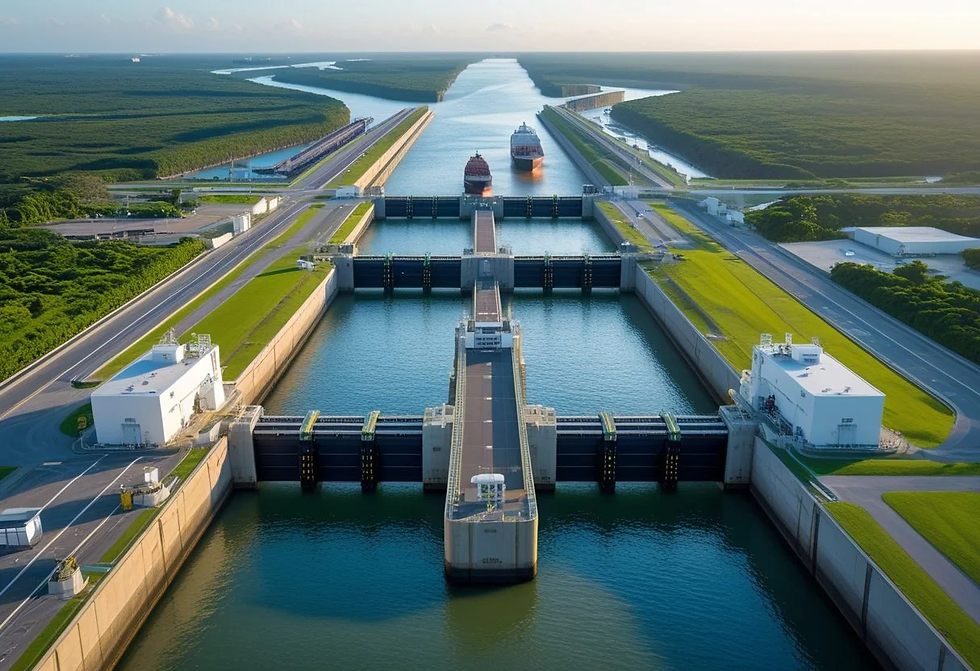
When most people picture the Panama Canal, they imagine the original locks at Gatún, Pedro Miguel and Miraflores.
Those are the locks of the original Canal, dating to 1914. The original chambers are around 1,000 feet long and 110 feet wide, and for decades they determined the maximum dimensions of ships that could make the transit. That size became known around the maritime world as Panamax.
How the Canal has grown.
In 2016, Panama opened the Expanded Canal, adding a third lane with the much larger Neopanamax locks at Agua Clara on the Atlantic side and Cocolí on the Pacific side. Those locks are 1,401 feet long and 180 feet wide, allowing larger ships to make the journey.
The new locks also use a fascinating system of water-saving basins that recycles some of the water used during the lockage.

Today's cruise passengers can experience either the original locks or the expanded locks. It isn't a matter of one cruise line being an “old Canal” cruise line and another being a “new Canal” cruise line. Size and design of each ship determine which locks it uses. During the 2026 cruise season, Norwegian Cruise Line, Carnival Cruise Line and Royal Caribbean are offering both full and partial Canal transits. Large ships including Norwegian's Bliss, Joy and Encore are now transiting the larger Neopanamax locks.
So do some homework. Consider specific ships and itineraries rather than simply looking at the cruise-line name.
Full Transit or Partial Transit?
This is one detail travelers should understand before booking.
Transiting the Panama Canal by cruise ship on a full transit means the ship actually crosses the Isthmus of Panama from one ocean to the other. You experience the locks, Gatun Lake and the central portion of the Canal before eventually emerging into the opposite ocean.
A partial transit gives you a taste of the Canal experience without crossing the entire waterway. So you'll likely sail roundtrip from Miami, as opposed to sailing from one coast of the U.S. and passing through the canal to the other coast.
Both can be fascinating, but if your dream is to say, “We sailed from the Atlantic to the Pacific through the Panama Canal,” make certain your itinerary is the full transit we do, from San Diego or Los Angeles to a Florida port or vice-versa.

Another Amazing Part: The Canal Runs on Rainwater
Here's the part that fascinated us most.
The Panama Canal is not a giant ditch at sea level. It is essentially a gigantic freshwater elevator.
Ships are raised approximately 85 feet above sea level into Gatun Lake. They cross the lake and the Continental Divide at that elevation and are then lowered again toward the opposite ocean.
And here's the truly remarkable part: there are no pumps doing the lifting.
Gravity does the work. Rain falls over Panama's tropical watershed and fills the lakes, dams and reservoirs that supply the Canal. When a ship enters a lock, water flows into or
out of the chamber by gravity. Water itself is the mechanism that raises and lowers the ship.

Think about that the next time you stand on the deck of a cruise ship as millions of gallons of water move around you.
The ship isn't being mechanically lifted.
The ship is floating on rainwater.
That is one of the most elegant pieces of engineering in the entire Canal.
It explains the Canal's greatest modern challenge: water. The project is a hydraulic staircase across Panama and because it relies on freshwater from watershed, drought affects how many ships can transit and how much cargo they can carry.
Watch the Locks, But Watch the Jungle and Soak Up the culture, too
Our Canal transits have visited seven countries, two dozen villages and several major cities including Cartegena, birthplace of the magnificent writer and Colombian native son and Nobel Prize winner Gabriel Garcia Marquez. One of our tours passed his home; we chose it to fit our interest in music, history, art and literature. Tours give you the option to tailor.

One of our greatest pleasures on a Canal transit is that we aren't just looking at concrete and steel. We pass through a tropical landscape with much to explore -- cities, nature and ancient cultures.
We've admired green hills, dense vegetation, Mayan ruins, islands and an extraordinary variety of wildlife. The Canal zone feels surprisingly wild considering it's one of the world's busiest commercial waterways. Huge container ships appear around the bend as cruise ships pass.
The contrast between tropical wilderness and modern maritime commerce makes a Canal adventure visually fascinating.
A Little History Makes the Transiting the Panama Canal By Cruise Ship Even Better
The story of the Panama Canal is filled with ambition, tragedy and engineering determination. Good to do a bit of homework.
We read David McCullough's famous book on the making of the Panama Canal. "The Path Between the Seas" is an engaging and award winning narrative chronicling the monumental engineering feat and its historical significance in transforming global trade routes.

The French began to build a canal in the late 1800s under Ferdinand de Lesseps, famous for his role in constructing the Suez Canal. Tropical disease, difficult terrain, engineering problems and financial collapse ended that effort. The United States took over the project in the early 20th century and completed the lock-based Canal on Aug. 15, 1914.
The human cost was enormous. Workers battled malaria and yellow fever as well as mud, torrential rainfall and excavation to cut through the Continental Divide.
When you cruise through the Canal today, you see gorgeous scenery and impressive locks. Knowing what it took to build it all adds another dimension.
The Canal Today -- and the Problem of Water
The Canal's future isn't simply about how many ships it can accommodate.
It is about water. The drought of 2023-24 demonstrated how serious that issue can become. The Panama Canal Authority pledges to protect water supplies and maintain reliable operations. Water availability is a central issue in long-term planning. Now Panama is advancing the Río Indio Lake project, a multipurpose reservoir to increase water storage and provide greater long-term security for both human consumption and Canal operations.

The project intends to secure water for more than half of Panama's population while supporting Canal operations into the future. Difficult questions are on the table: land use, communities and relocation, so it is more than an engineering project.
The focal point of the Canal's future is not concrete, steel or locks. It's water.
What About Canal Fees?
The Panama Canal is also a business, and using it isn't cheap.
Ships pay tolls based on factors including their size, type and the locks they use. The Canal Authority continually adjusts its maritime tariffs and services. For cruise passengers, these costs are buried inside the economics of the cruise itinerary, not as a separate bill.
A large cruise ship with thousands of passengers is an expensive vessel to put through the Canal. So larger Neopanamax ships generate greater tolls than smaller ships.
As water becomes more precious, the balance among tolls, ship size, water conservation and the number of daily transits will become increasingly important.
Our Highlights of Our Transits of the Panama Canal
Watching our ship enter the first lock.
Seeing the enormous gates close behind us.
Feeling the ship rise as the lock fills with water.

Watching locomotives guide ships through the original locks while tugboats maneuver larger ships and cargo vessels through the Neopanamax locks.
Crossing Gatun Lake.
Seeing the Canal Zone's tropical landscape.
Visiting Miraflores Visitor Center.
Adding days before or after the transit.
Exploring Panama City.
You'll want to be on a deck or your veranda -- it typically takes about eight to ten hours to make a complete transit. The overall experience feels happily longer because of time approaching and leaving the locks.
There are many beautiful places and exciting cruise destinations.
Why the Panama Canal is unique.
It combines history, tropical scenery, engineering and the thrill of watching a modern-day wonder operate. Don't simply book a cruise that passes Panama -- make the Canal itself part of trip. Add a few days before or after your transit to explore Panama and the locks. Cruising the canal is an experience every traveler should have at least once. We recommend Cunard and Norwegian Cruise Line; both offer splendid in-depth itineraries.

COMING SOON: Montana is a vast and intriguing state, the nation's fourth largest and the biggest land-locked state in the union. The Yellowstone Valley is an important part of the state, with Billings the center of activity. The Western Heritage Center there is a marvelous place to learn more about the valley, which intrigued Lewis and Clark and attracts thousands of visitors each year. We take readers to this vibrant museum on historic Montana Avenue to experience an eye-opening range of exhibits. Learn things you didn't know about the Yellowstone Valley's history, the adventurous people who shaped it, and the art it has produced -- both from indigenous people and a range of authentic folks who made Montana home and invented themselves in Big Sky Country.
If the Panama Canal story sparked your wanderlust, there’s plenty more waiting for you. Remember to explore more travel stories and inspiration at WhereIsCookie.com


I have this on our bucket list. Thanks for the interesting nudge!
We are booked for an October transit, westbound. Very excited. Nice piece and pretty photos. Thanks for the introduction. 👍