


Seville Spain seduces with its architecture, tapas, flamenco and orange trees
Updated: Jul 25
QUINTESSENTIAL ANDALUSIAN CITY THRILLS WITH GORGEOUS BUILDINGS, ROMANCE, STIMULI AT EVERY TURN

STORY By CHRISTENE MEYERS
PHOTOS By BRUCE KELLER
"The Carpe Diem Kids"
Editor's Note: This piece was reviewed and updated July 26, 2026
Seville Spain, the sun-drenched capital of Andalusia, is a city where centuries of history blend seamlessly with a lively, modern spirit.
Its winding streets, ornate palaces, and vibrant plazas create a setting that feels both timeless and electric. Whether you're exploring the charming Barrio Santa Cruz, savoring authentic tapas, or losing yourself in the emotion of a flamenco performance, Seville invites you to slow down, soak it in, and experience Spain at its most captivating.
IF PARADISE is a garden, as Islamic belief would have it, then the Spanish city of Seville is a bit of heaven on Earth.
This beautiful city merges Islamic splendor and Catholic extravagance. Add olive oil, orange blossoms, tapas and flamenco.
This recipe for "city success" is served up in tourist friendly Seville, Spain, a quintessentially Spanish city.

Shops offer an array of flamenco dresses, pottery and sherry. |
Seville is the jewel of western Andalusia. It's the birthplace of flamenco and some think tapas. These bite-size edibles are served with cocktails, or as a satisfying meal.
HERE ARE a few highlights of our recent visit -- easily accomplished in a couple full days:

* The Plaza de Espana, built for an international exhibition, is huge, welcoming and a favorite place for locals to stroll.

* The famous Alcazar, built in the 1300s, is one of Europe's architectural masterpieces. This UNESCO World Heritage Site offers sunken gardens, intricate tile and plaster decor. The Hall of Justice with its lovely gardens, houses the stunning Palacio de Don Pedro, a Moorish masterpiece. The fabulous throne rooms and reception halls include one in which Columbus was received upon his return.

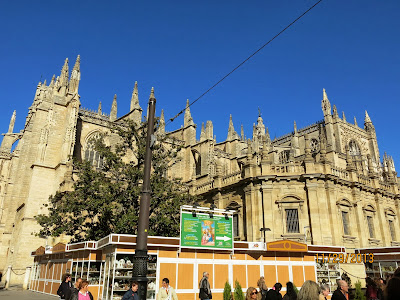
* SPEAKING OF Columbus, Seville's Cathedral stands on the sight of a huge mosque, used as a church for a time after Seville fell to the Christians in 1248. The cathedral was built after the mosque was mostly demolished. Inside one of its opulent chapels stands the monumental tomb of the explorer in which his bones are supposedly housed, brought from Cuba in 1898.
THE LARGEST altarpiece in the world is part of the cathedral. The belfry, once the minaret of the mosque, is home to a 16th century bronze weather vane, symbol of Seville's faith.
* Seasoned tourists spend a half-day at the Alcazar and another at the Cathedral. There's lots to take in, so visit on separate days, with time for a park, picnic or a relaxing tapas stop.

* This city of believers is also home to many delightful tapas bars, and flamenco abounds -- on a grand scale in expensive nightclubs and on street corners where locals pass the hat or scarf for Euros.
* SEVILLE's museums vie for attention -- contemporary and classical art and even a flamenco museum, Museo del Baile Flamenco.
* Beautiful hotels, exciting paradors and B&Bs and a hotel with pianos in the rooms offer a satisfying range. Hotel Amadeus on Calle Farnesio is run by an eccentric music-loving family. Upright pianos in the soundproofed rooms allow for practicing on holiday.

* YOU'RE CLOSE to Andalucia's enticing hill towns, and Jerez de la Frontera, home of two Spanish symbols: rich delicious sherry and prancing, dancing horses. Seville is also famous for its orange trees and graceful pink flamingos.
* Friends sipped their way from Seville to Cordoba recently, describing in a postcard the delights of sherry, flamenco, tapas and flower sprinkled white washed patios. "Electrified our senses," they said.


Comments